Natural capital update: Natural capital and the art of patience
Natural Capital & Carbon Insights 08 December 2025
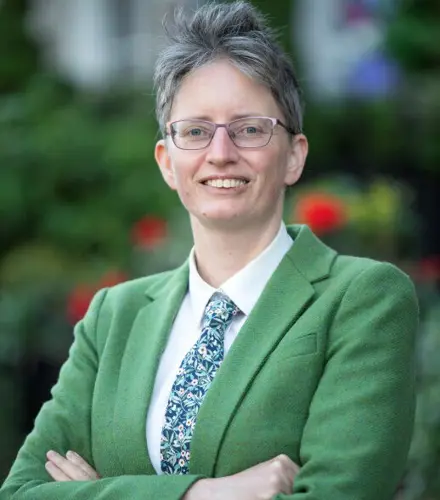
By Eleanor Harris.

My academic background is as a historian, and I can't help comparing the development of natural capital markets to the development of the railways. The railways transformed our idea of time in a way that has only accelerated. Remember before the lockdown, when scheduling a meeting between three or four parties meant booking half a day, catering, and travel several weeks ahead? It seems a lifetime ago that we didn’t just hop on four or five face-to-face meetings in a day, scheduled in a matter of minutes.
So it is quite understandable that in natural capital markets we have lost the art of patience, particularly when it is so apparent that climate change and biodiversity decline are so urgent. Although nature markets have been developing since the Rio Earth Summit in 1992, they have only become mainstream in the UK in the past 15 years. While Woodland Carbon Units now have strong market value, the slow growth of our trees means they are only just beginning to become available.
Frenzy of activity
Yet this delay is perhaps just as well, as in the intervening years there has been a frenzy of essential capacity-building activity. Innovators have developed mechanisms (metrics, codes, registries). Public and private regulators have developed safeguards (standards, audits, tax regimes). Professionals such as land agents, lawyers, financial advisors, corporate sustainability advisors, follow with developing advice on how new mechanisms can be used in practice and within the rules in particular business situations. And market actors (landowners, corporates, investors) are beginning to understand and participate in the market.
Whatever your level of natural capital expertise, I am sure it is vastly greater than it was a few years ago, while simultaneously still feels inadequate to navigate the market with the full confidence you bring to other business. Since this is true for almost all of us in the natural capital world, it becomes apparent why there is simultaneously a frenzy of activity and development, combined with agonisingly slow progress in a functioning nature market.
Measurable, rewardable nature restoration
Nature market development is not a neat process. It is iterative, overlapping, collaborative, and inevitably filled with redundancy and decisions which could have been made better with hindsight. Remember our railway comparison. Numerous railways were planned but never built — the frenzy of joint-stock company formation, surveying, upheaval in the neighbourhood coming to nothing. Many railways were built which resulted in absurd and inconvenient situations, such as lines of different guages meaning passengers all had to get out mid-journey and change trains. And only a few decades before the railways, an entire network of canals had been constructed all over the country: a huge investment for what turned out to be a very short economic lifetime (but resulting in fantastic blue infrastructure with great public value today).
Emerging markets have high risks but potentially high rewards. A landowner who planted woodland 15 years ago and did not sell the carbon units would now be in possession of a valuable carbon asset: but they could not have known that at the time. Are we at a similar point in biodiversity markets? There is a sense of growing inevitability that nature must find its way to economic value somehow in coming years. Nature-based carbon markets were in many ways a proxy for the real goal of measurable, rewardable nature restoration. Yet the speed and shape by which biodiversity markets will emerge is still full of uncertainty.
As with woodland carbon, it seems likely that biodiversity markets are best viewed as a long-term investment. Where the circumstances are right, and risks and costs low, there is an opportunity to start building assets now to get ahead of markets expected to emerge in coming years.
· Natural Capital: Galbraith’s expert advisers guide our clients in realising value in all land uses – by assessing and measuring natural assets, furthering opportunities in biodiversity net gain, and ensuring stakeholders are rewarded fully for their investment in and contribution to delivering ecosystem services and net-zero outcomes.